
Kon’nichiwa!
The classic Golden Route of Japan is often done as Tokyo to Kyoto, taking the shinkansen bullet train between the two cities.
Sometimes it might go something like Tokyo to Hakone to Kyoto to Hiroshima. While it is a detour, Hakone doesn’t deviate too far off from the direct route between Tokyo and Kyoto. Hakone is best known for being an onsen hot springs town and having Mount Fuji views, and for reference, the shinkansen bullet train gateway is Odawara.
The NEW Golden Route makes a much bigger detour to get from Tokyo to Kyoto!
It goes through Central Japan, and it can include destinations like Nagano and Kanazawa before going to Kyoto. This route allows you to get away from the most popular cities of Tokyo and Kyoto, while still experiencing some of Japan’s historical towns, traditional streets, authentic culture, and even more mountain scenery.
3 weeks can be an ideal amount of time to spend traveling the New Golden Route in order to explore Japan at a slower pace. (But you can also do it much quicker if you are short on time.)
There are partner websites included on this blog. I may earn a commission.
I’ve made a plan below for the New Golden Route. It’s an 18-day Japan itinerary perfect for a first trip to Japan.
This itinerary lines up so that you can use a 14-day JR pass to cover the cost of train tickets, starting on the day you leave Tokyo. The total cost of these major train routes of the Japan itinerary as I’ve outlined is about the same as buying individual tickets, so the JR pass mainly adds convenience.
In general, a JR pass becomes worth it if you are planning to take the shinkansen bullet train or limited express train a lot.
Unlike a 7-day JR pass itinerary where you need to be moving along pretty quickly from city to city in order to make the JR pass worth it (as it requires a lot of travel in a short amount of time), you can make a 14-day JR pass itinerary worth it even without packing up and moving on every 1-2 nights. For this (almost) 3-week New Golden Route itinerary, I’ve set it up so you’re staying at least 3 nights in each city.
Whether a JR pass is actually worth it for you will entirely depend on the individual route that you choose to do over 14 days. So you’ll need to add up what the cost would be to buy individual train tickets and compare that with the cost of a 14-day JR pass. Google maps will give you an estimate of the train ticket, which works well for research purposes in determining whether a JR pass it worth it.
On the day-by-day new golden route itinerary, I’ve included the train stations to use for google maps so you can check the train ticket cost.
Check the cost of a Japan Rail pass: 7-day, 14-day, or 21-day JR pass
This 18-day Japan itinerary leaves from Tokyo and includes the return back. It has the classic destinations of Tokyo, Kyoto, and Hiroshima, as well as places that are often skipped on a first trip to Japan that will allow you to experience more of traditional Japanese culture.
Instead of returning back to Tokyo, you may also consider flying out of Osaka, which is closer to Kyoto and Hiroshima.
First is the quick summary of the plan, and below that you’ll find some logistical details!
Let’s go!
New Golden Route itinerary
- Day 1: Tokyo arrival
- 3 nights in Tokyo
- Day 2: Cultural Tokyo and Modern Tokyo
- Day 3: Tokyo sumo experience
- Day 4: Tokyo to Nagano (START: DAY 1 of 14-day JR PASS)
- 3 nights in Nagano
- Day 5: Nagano day trip to Matsumoto Castle and Ancient Nakasendo Trail town
- Day 6: Nagano day trip to snow monkey park or Kamikochi Japanese Alps town
- Day 7: Nagano to Kanazawa
- 3 nights in Kanazawa
- Day 8: Cultural Kanazawa
- Day 9: Kanazawa day trip to Shirakawago village
- Day 10: Kanazawa to Kyoto
- 4 nights in Kyoto
- Day 11: Cultural Kyoto
- Day 12: Kyoto day trip to Himeji Castle
- Day 13: Cultural Kyoto
- Day 14: Kyoto to Hiroshima
- 3 nights in Hiroshima
- Day 15: Hiroshima nuclear peace park
- Day 16: Hiroshima day trip to Miyajima floating shrine
- Day 17: Hiroshima to Tokyo (DAY 14 of JR PASS)
- 1 night in Tokyo
- Day 18: Fly out!
- Or… Make it a 21-day JR pass by adding on a Northern Japan itinerary at the end and take the train from Tokyo to Hokkaido!
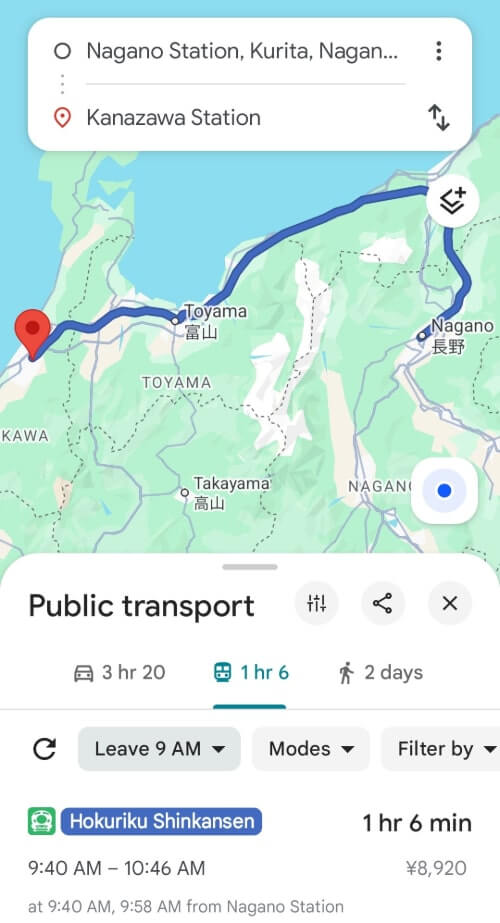
👆 Google maps makes it easy to plan out your train routes on the golden route! It will also give you an estimated cost of the train. When using google maps to plan your route, adjust the departure time to get a better idea.
Now, let’s get into it some more!
JAPAN TRAVEL > NEW GOLDEN ROUTE MAP | TOKYO MAP | KYOTO MAP
Day 1: Arrive in Tokyo!
Overnight in Tokyo (3 nights)
👆 Welcome to Tokyo! Goal: See Old Tokyo and New Tokyo!
Welcome to Japan! After landing in Tokyo at either Haneda Airport or Narita Airport, you can head to your hotel in Asakusa.
Asakusa is a perfect Tokyo neighborhood to stay in if you want your Japan trip to get as much of the traditional vibes as possible! It’s one of the most popular Tokyo neighborhoods to see history and culture in Tokyo. Asakusa is well-connected by train to get to other popular Tokyo attractions.
So once you’ve dropped off your luggage, you can have a walk around Tokyo’s oldest and most famous temple, the Sensoji Temple in Asakusa, for your first glimpse of cultural Japan! If you’re feeling up for it, then you can also head to the nearby neighborhood to go to the Tokyo SkyTree for your first glimpse of modern Tokyo. You can go for an evening waterfront walk along nearby Sumida River too!
Otherwise, Shinjuku is one of the most popular neighborhoods to stay in to be close to the big city vibes. You can get your intro to Tokyo through an evening Shinjuku food tour.
You can get a private transfer from the airport. (See the transfer reviews for Haneda Airport transfer and Narita Airport transfer.) Or once you arrive, you can head to the highway bus counter (look for signs) to buy bus tickets to get to central Tokyo. The highway buses (aka limousine bus) are equipped with luggage space. Or you can head for the train.
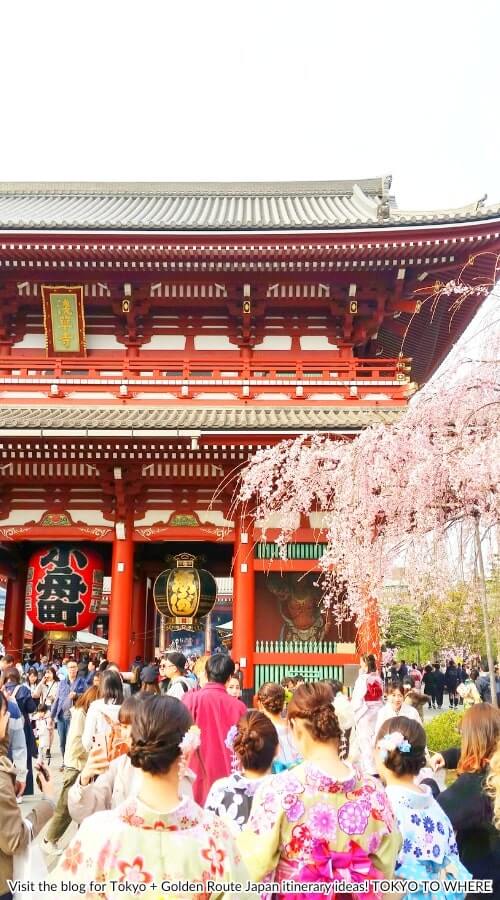
👆 See old Tokyo in Asakusa. You can rent kimono in Asakusa.
Where to stay in Tokyo
Stay in Asakusa at the Gate Hotel Kaminarimon or Kanzashi Tokyo Asakusa hotel so it’s just a few minutes walk to feel the Old Tokyo atmosphere at Sensoji Temple and Nakamise Street. You’re also not far from modern Tokyo with the Tokyo Skytree in a nearby neighborhood.
Get traditional Japanese vibes with a stay at the Edo Sakura ryokan. This is located near the neighborhoods of Asakusa and Ueno. It’s also a 10-15 minute walk from a train station on the JR Yamanote Line, which means that it has a direct train to the popular neighborhoods of Shinjuku and Shibuya (25-30 minute train ride).
Read the ryokan reviews on expedia or booking.com.
Day 2: Cultural Tokyo and Modern Tokyo
Overnight in Tokyo (3 nights)
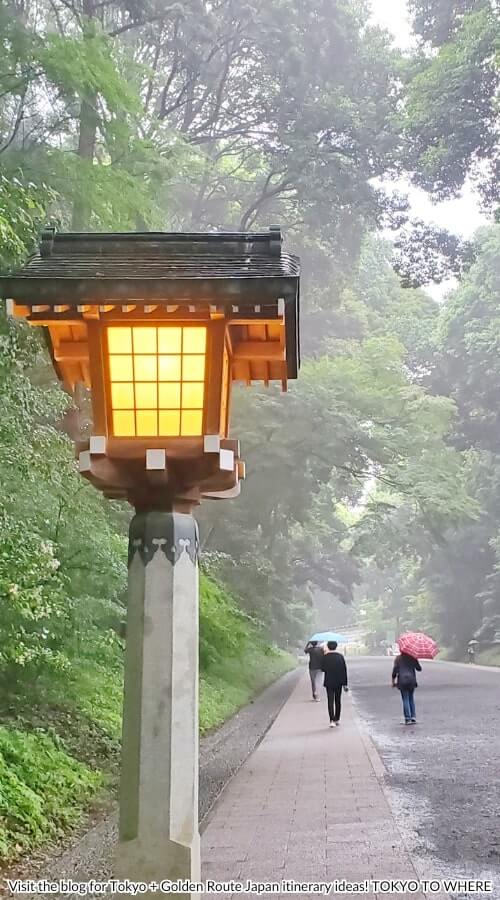
👆 Walking to Meiji Jingu Shrine to see more of cultural Tokyo.
For your first full day in Tokyo, it can be perfect to explore both the traditional and modern sides of the city. You need to accept that you can’t do it all so you’ll need to pick and choose!
For traditional Tokyo, the Meiji Jingu Shrine in Shibuya is the most famous shrine in Tokyo and it’s a walk through a forest to get to it. You can also head to the Hie Shrine to walk through a bright red torii shrine gate tunnel. If you’re not staying in Asakusa, you can then continue on to Asakusa for the famous Sensoji Temple. Your cultural Tokyo day can be a route from Meiji Jingu Shrine to Sensoji Temple that you do on your own.
Or, get your intro to Tokyo by doing a guided tour to Meiji Jingu Shrine, Sensoji Temple, and Tsukiji Market.
For iconic Tokyo city streets, you need to go see the Shibuya Scramble Crossing in Shibuya, as well as streets like Godzilla Road in Shinjuku. In the evening, you can go to the classic Shinjuku foodie streets of Omoide Yokocho and Golden Gai.
Tokyo is well-connected by train, and this is also your day to get to know the Tokyo transit system as you go to different neighborhoods! The google maps app really helps! Use the public transport directions, and it gives you lots of details if you click around! And it’s okay if you mess up when taking the train. Consider it part of the Tokyo experience. 🤪
The easiest way to pay for local train tickets is by using an “IC card,” which is essentially a cash card that you can use to tap and pay for train tickets, as well as lots of other things. There are many convenience stores, coin lockers (luggage storage at train stations), and even some vending machines that accept IC cards. You can buy an IC card at the ticket machine of the first train station you go to in Tokyo, where you will be able to buy IC cards such as a suica card or pasmo card. (It really does not matter which. The train station you go to will sell one or the other.) And you can continue to use the same card for local transportation in the next cities you go to.
Take a look at the TOKYO MAP to get started in choosing what things to do in Tokyo you want to prioritize!
Day 3: Tokyo sumo district
Overnight in Tokyo (3 nights)
With tomorrow being the first real travel day in Japan, you can stay close to home! From Asakusa, it’s a 20-30 minute walk to get to the sumo district of Tokyo near Ryogoku Station. You can have a so-very-Japanese experience and get a glimpse into sumo culture by having a chanko hot pot meal with a former sumo pro! And if you didn’t have a chance to go to Tokyo Skytree on the first day, you can make time on this day too.
Day 4: Tokyo to Nagano
Start: Day 1 of 14-day JR PASS
Tokyo Station to Nagano Station shinkansen bullet train time: 1.5 hours
Overnight in Nagano (3 nights)
Head to Tokyo Station so you can catch your first shinkansen bullet train ride in Japan! You can activate your JR pass at a Tokyo Station JR office.
But before you get on the train, put your luggage in a coin locker at Tokyo Station. Then, you walk to the Tokyo Imperial Palace for the famous bridge view and for a walk around the Imperial Palace East Gardens.
Coin lockers are essentially self-service storage lockers, and you can find them at train stations across Japan. For an example of how they work, see my post on the Yokohama coin lockers that I used.
Then get on the train to Nagano! Once you arrive in Nagano, drop off your luggage at your hotel or Nagano Station coin lockers. Then head to the historic Zenkoji Temple which was built in the 7th century. In the evening, walk the streets to see soba noodles being made through the windows of local restaurants… and eat fresh soba! Rest up for Nagano day trips coming up!
Cost of JR train ticket:
- Tokyo to Nagano shinkansen train ticket: 8500 yen (US$55)
If you are traveling without a JR pass, you can buy individual shinkansen train tickets at the train station at a JR office or ticket machine.
Where to stay in Nagano
The Chateraise Hotel Nagano is a simple and comfortable hotel with the option of add-on breakfast that’s a 5-minute walk from Nagano Station.
What does a shinkansen ride look like?! I’ve got a walk-through for that! See my Kyoto to Okayama shinkansen train ride.
Day 5: Nagano day trip to Matsumoto Castle and Ancient Nakasendo Trail town
Overnight in Nagano (3 nights)
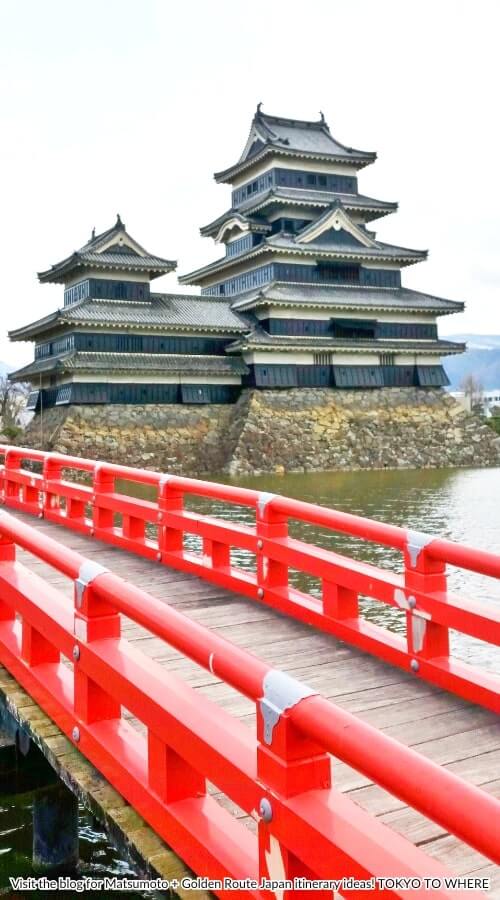
Today is a day to visit a castle town and a preserved traditional town!
First you’ll go to the city of Matsumoto so you can visit one of Japan’s few original castles that are remaining today, Matsumoto Castle. You can walk from Matsumoto Station to Matsumoto Castle and more, like to the small shops on frog street.
Then once back at the train station, you can take the train to the historic town of Narai, which is on the ancient Nakasendo Trail, a route once traveled by samurai through the mountains of Japan.
The most famous section of the Nakasendo Trail is Magome to Tsumago, but that’s most commonly done as a day trip from Nagoya to the Nakasendo Trail. So as an alternative from Nagano and Matsumoto, the town of Narai will also give you a good glimpse into the former samurai route!
Day trip to Matsumoto itinerary (and Nakasendo Trail)
- Nagano Station to Matsumoto Station (1 hour)
- Spend time in Matsumoto (2-3 hours)
- Matsumoto Station to Narai Station (1 hour)
- Spend time in Narai (2-3 hours)
- Narai Station to Nagano Station (2 hours 10 minutes, with 1 transfer)
Cost of JR train tickets:
- Nagano to Matsumoto limited express train: 2900 yen ($20)
- There’s a cheaper regular train that takes 30 minutes longer for 1200 yen ($8)
- Matsumoto to Narai: 600 yen ($4)
- Narai to Nagano: 3400 yen ($25)
Day 6: Nagano day trip to snow monkey park
Overnight in Nagano (3 nights)
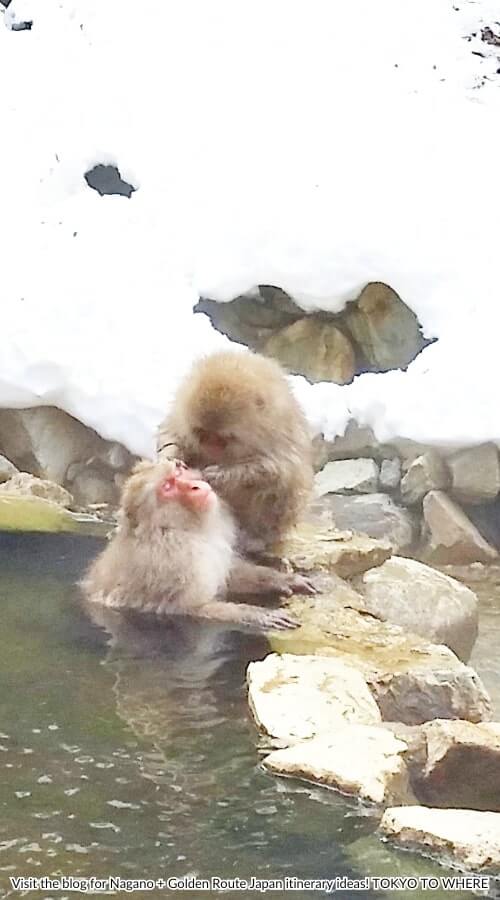
It’s a day to see snow monkeys! The Jigokudani snow monkey park is a spot where you have a chance to see snow monkeys in the wild warming up in hot springs in the winter. You do have a chance to see the snow monkeys year-round, it just likely won’t be in the hot springs if it’s not cold outside.
Day trip to snow monkey park itinerary
- Nagano Station to snow monkey park bus stop (2 hours by direct bus, or combo of train and bus)
- 40 minute walk from bus stop to snow monkey park
- Spend time seeing monkeys in the hot springs!
- Back to Nagano Station (2 hours)
Cost of transportation
The transportation between Nagano Station and the snow monkey park will cost around 2000 yen ($15), whether you choose the direct bus or the train and bus combo. (Use google maps.) There isn’t a JR route to get to the snow monkey park so you won’t be able to use a JR pass to get there. There is a 2-day snow monkey pass that includes transportation, and if you are only using it to go to the snow monkey park it is worth it by a little. If you want to use it to go to the Obuse chestnut town on another day, it will definitely be worth it.
More Nagano day trips
If you’ll be doing your New Golden Route itinerary in the spring/summer/fall, then you’ll also want to consider a day trip to Kamikochi in the Japanese Alps. If you’ll be going in the spring, you’ll want to consider going to see the iconic massive snow wall on the Tateyama Kurobe Alpine Route.
The Togakushi Shrine to see tall cedar trees is another popular day trip from Nagano.
Nagano was host to the 1998 Winter Olympics, which means that it’s home to world-class ski resorts like Hakuba, Nozawa Onsen, and Shiga Kogen. Spend a few days at one, or do an organized day trip from Nagano that includes ski or snowboard rental.
From the end of January to end of of February, you can visit an igloo village and have a warm meal inside the igloo!

👆 Kamikochi is a popular summer destination in the Japanese Alps. You can make it a day trip from Nagano or Matsumoto. Depending on the day trips you’re interested in, you may prefer to make Matsumoto your overnight base instead of Nagano. There is a direct limited express JR train to Matsumoto Station from Shinjuku Station in Tokyo.
Day 7: Nagano to Kanazawa
Nagano Station to Kanazawa Station shinkansen bullet train time: 1 hour 10 minutes
Overnight in Kanazawa (3 nights)
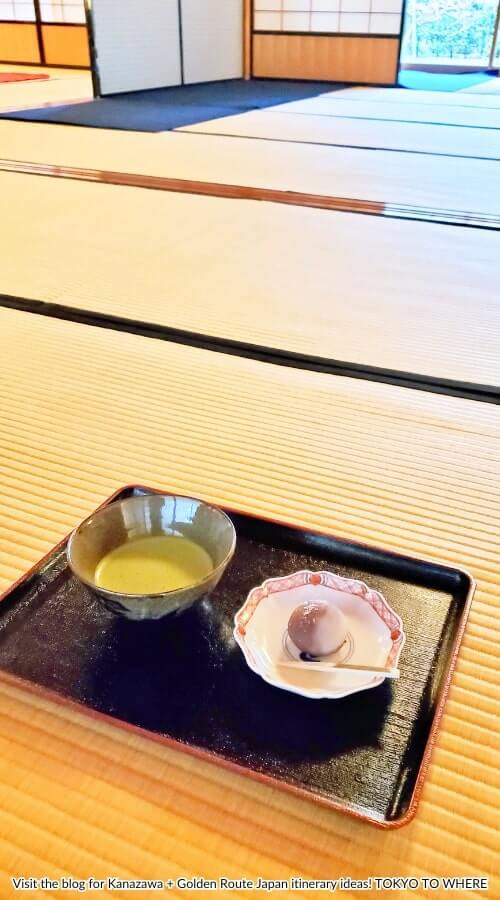
It’s back on the shinkansen bullet train! This time to go to Kanazawa, which is often compared with Kyoto in terms of its preserved historic districts, beautiful gardens, and traditional crafts… but with fewer crowds.
Drop off your luggage at your hotel or the Kanazawa Station coin lockers, and get started with exploring!
You can begin at Kenrokuen Garden, said to be one of the top Japanese gardens in Japan. There’s a tea house at the garden, which means that when you’re there, you can have traditional matcha tea while sitting on traditional Japanese tatami floors! You can go on your own just for the drink, or you can enhance the experience with a traditional tea ceremony. It’s a perfect welcome to Kanazawa! You can then make your way to Higashi Chaya District, the most well-known Kanazawa historical area, for an easy walk along the traditional streets.
Cost of JR train ticket:
- Nagano to Kanazawa shinkansen train ticket: 9300 yen (US$60)
Where to stay in Kanazawa
You can stay at the Kanazawa Hakuchoro Hotel Sanraku for a hotel with comfortable rooms that has a public onsen hot springs bath. It’s a 5 minute walk from the Kenrokuen garden and a 10 minute walk from the Higashi Chaya historical district. There’s an option add-on breakfast buffet, and you can also eat at the on-site upscale restaurant to have a fine dining seafood experience for lunch or dinner.
Read the hotel reviews on expedia or booking.com.
Day 8: Cultural Kanazawa
Overnight in Kanazawa (3 nights)

Spend the day exploring more Japanese culture and history!
Head to the Nagamachi samurai district, and you can walk inside traditional homes where samurai used to live to see what it was like. There’s also the Omicho Market that you can go to for food. Kanazawa is also known for gold leaf. You’ll find gold-themed things all around the city, and you can even eat literal gold ice cream! You can also do ninja things in Kanazawa, like the Myoryoji Temple (aka ninja temple) to see how the temple was built to trick would-be invaders, as well as the Ninja Weapons Museum where you can have fun throwing ninja stars like darts.
For a fun ninja experience as a day trip from Tokyo, you can head to Odawara Castle for “ninja training“! There is a netflix show called House of Ninjas that features Odawara.
Day 9: Kanazawa day trip to Shirakawago village
Overnight in Kanazawa (3 nights)

Now it’s time for one of Central Japan’s most popular day trips, and that’s to the rural village of Shirakawago that is famous for its iconic steep gassho-zukuri thatched-roof homes. As well as walking around to see the houses from outside, there are some houses that you can walk inside to see how people lived, like the Wada House.
Day trip to Shirakawago itinerary
- Kanazawa to Shirakawago bus (1.5 hours)
- Spend time in Shirakawago (3-4 hours)
- Shirakawago to Kanazawa bus (1.5 hours)
Cost of bus tickets
- Kanazawa to Shirakawago bus ticket one-way: 2800 yen ($20)
This isn’t a JR route so your JR pass won’t cover the bus to Shirakawago.
Day 10: Kanazawa to Kyoto
Kanazawa Station to Kyoto Station by train, with 1 transfer: 1 hour 45 minutes (shinkasen bullet train and JR Thunderbird limited express train)
Overnight in Kyoto (4 nights)
Now it’s back on the shinkansen, but it won’t get you all the way to Kyoto, so you’ll need to transfer at Tsuruga Station and get on a limited express train the rest of the way.
And then… welcome to Kyoto! You’ve arrived at an ancient capital of Japan, that’s home to tons of UNESCO world heritage temples. There are so many traditional Japanese temples, shrines, and gardens for you to see, must-see big-name ones as well as smaller ones.
Once you’re at Kyoto Station, you can leave your luggage at a coin locker inside or outside the train station so you can immediately get started exploring Kyoto!
If you’re hungry, leave out of the central exit, and follow the signs for the underground dining where there will be lots of Japanese restaurants. Once you’re ready to leave the train station, Nijo Castle is a short train ride from Kyoto Station. Walk around the Japanese gardens there and have matcha at the on-site cafe! Kyoto is known for matcha, and it’s the perfect place to have matcha. Drink it at one of the many Japanese gardens that have a teahouse, or have an even more enriching experience by doing a matcha tea ceremony in Kyoto.
Get your intro to historical and cultural Kyoto by doing the Gion evening tour on your day of arrival!
Cost of JR train tickets:
- Kanazawa to Kyoto train tickets: 7900 yen (US$50)
Where to stay in Kyoto
Staying near Kyoto Station can be convenient since it’s well-connected. To prioritize convenience, stay at a place like Matsumoto Ryokan or Hotel Elcient Kyoto Hachijoguchi. While the area itself tends not to feel very active, you can go to the underground dining area at Kyoto Station for lots of food options.
If you want charming streets, evening walks, and that traditional Kyoto vibe, pick a neighborhood like Gion and stay at a place like Hotel Yuraku Kyo-Yasaka.
Day 11: Cultural Kyoto
Overnight in Kyoto (4 nights)
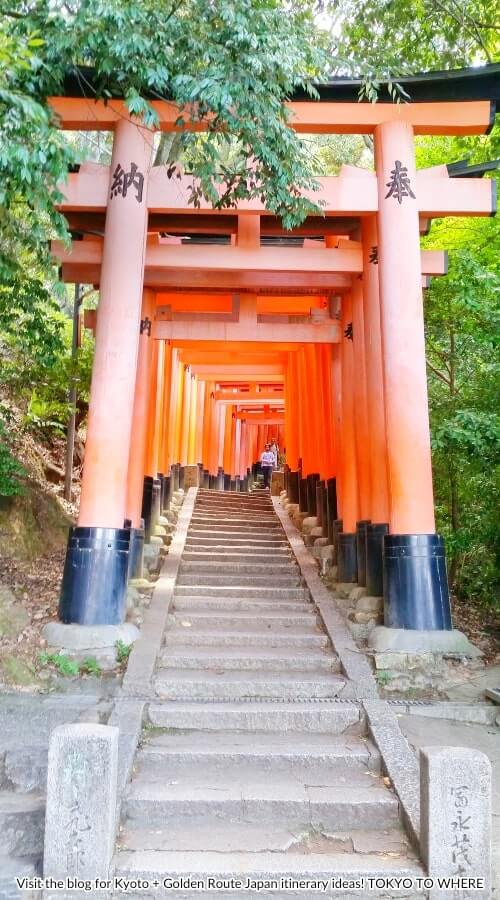
For your first full day in Kyoto, you can do 2 of the most famous things about Kyoto!
First head to Fushimi Inari Taisha to walk through the iconic red torii shrine gate tunnel. You can spend more or less time here depending on how much time you want to spend. You can walk through the first set of shrine gates and then head back, or complete the whole loop to walk through a whole lot more shrine gates!
Next head to the neighborhood of Arashiyama where you can walk through Japan’s most famous bamboo forest. While you’re there, you can also visit the Tenryuji Temple, Okochi Sanso villa gardens, monkey park, and/or smaller temples! You can make a day of it by spending your whole day only in Arashiyama too.
Day 12: Kyoto day trip to Himeji Castle
Overnight in Kyoto (4 nights)
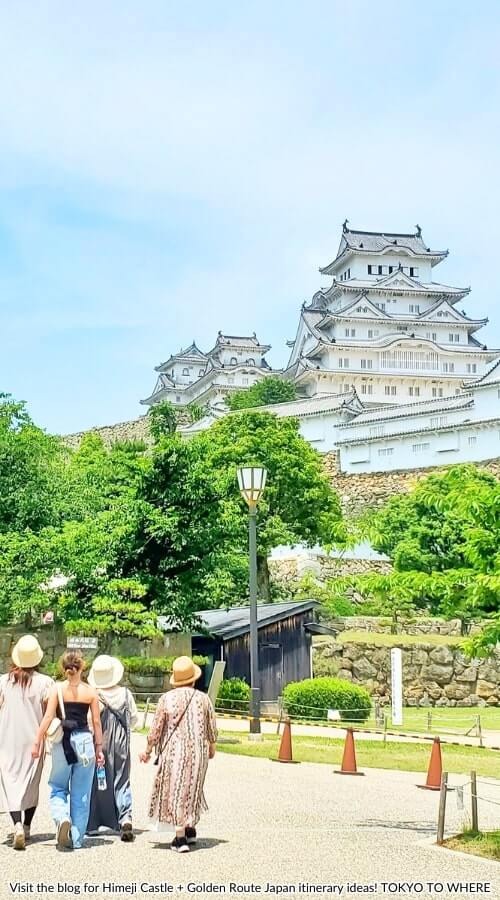
Today is a day trip to another castle town.
Head to Himeji to see Himeji Castle, which is one of Japan’s most famous castles. You can walk to the iconic white castle from Himeji Station, and right near the castle is Kokoen Garden where you can spend time walking around Japanese gardens and stop at the teahouse for matcha tea!
Instead of a day trip to Himeji: Spend the day in Kyoto and go to Himeji on your way to the next destination! Himeji is located between Kyoto and Hiroshima (next destination), and another option is to stop by Himeji Station on your way to Hiroshima. There are coin lockers at Himeji Station where you can keep your luggage, so it’s reasonable to go from Kyoto to Hiroshima with a stop in Himeji.
Day trip to Himeji itinerary
- Kyoto Station to Himeji Station shikansen train: 45 minutes
- Spend time in Himeji (3-5 hours)
- Himeji Station to Kyoto Station shinkansen: 45 minutes
Cost of JR train ticket:
- Himeji to Kyoto shinkansen train ticket one-way: 5900 yen ($40)
- Himeji to Kyoto regular train ticket one-way: 2200 yen ($15)
- The regular train takes 1.5 hours
More Kyoto day trips
One of the most popular day trips from Kyoto is to the city of Nara. This is another former ancient capital of Japan, and along with historic sites, it’s known for the deer at Nara Park and around the city. From Kyoto Station to Nara Station is a one hour train ride. If you’d like to visit Osaka for the Osaka Castle, the famous area of Dotonbori, and/or the lion-head shrine, then it’s about an hour away by train from Kyoto as well.
Day 13: Cultural Kyoto
Overnight in Kyoto (4 nights)
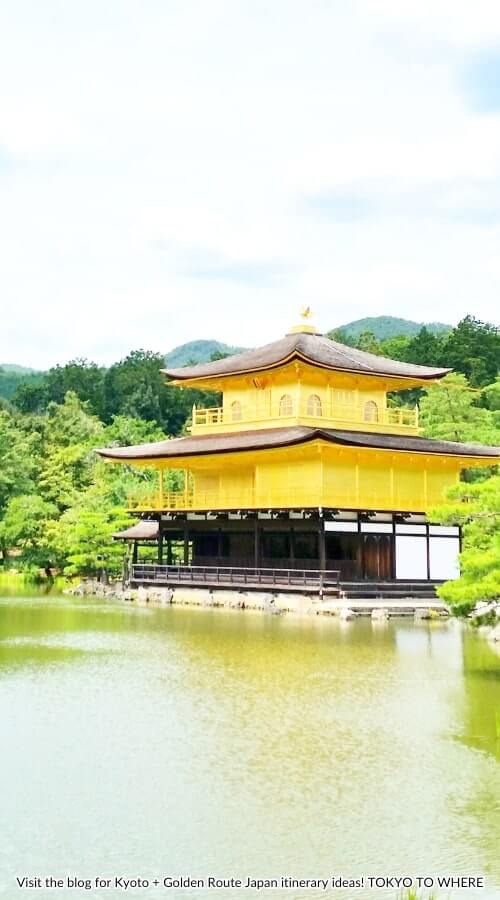
Continue your exploration of Kyoto!
Well, it is called the new GOLDEN route of Japan, so… it’s only fitting to go and see the Golden Temple of Japan! 🤪 Nearby is one of the most well-known zen temples with a sand/rock garden. So you can make it a trip out to see Kinkakuji Temple (golden temple) and Ryoanji Temple (rock garden).
And then, you can also do one of the most classic walking routes of Kyoto, from Gion/Yasaka Shrine to Kiyomizu-dera Temple, by way of Ninenzaka and Sannenzaka streets, which are classic traditional streets.
Take a look at the KYOTO MAP to get started in choosing what things to do in Kyoto you want to prioritize!
Day 14: Kyoto to Hiroshima
Kyoto Station to Hiroshima Station shinkansen bullet train time: 1 hour 40 minutes
Overnight in Hiroshima (3 nights)
It’s back on the shinkansen bullet train, now to Hiroshima for both a serious and fun time.
You’ll get to know the serious side of Japan with a walk through the Hiroshima peace park, and you can have a fun time with the deer of Miyajima as well as the iconic floating shrine gate.
Hiroshima’s specialty food is okonomiyaki, and there are lots of okonomiyaki food spots near Hiroshima Station. If you’re hungry when you arrive, this can be your first stop!
If your dates line up in the summer (or late spring or early fall), there is a baseball team in Hiroshima. Japanese baseball games are fun cultural experiences because they have dedicated cheering sections where you can have fun cheering with locals! (Read the baseball game reviews of what it’s like!)
There are also baseball teams in Tokyo, as well as in Osaka and Nagoya. (And more, but those are the cities that are on/near the golden route! Notable MLB players at golden route stadiums: Yoshinobu Yamamoto played for a team in Osaka during his Japanese baseball days, Roki Sasaki played in Chiba outside of Tokyo, and Shota Imanaga played in Yokohama also outside of Tokyo. Shohei Ohtani’s old team is not on the golden route, and instead you’ll need to go to Northern Japan for that!)
Cost of JR ticket:
- Kyoto to Hiroshima shinkansen train ticket: 12,100 yen (US$80)
Where to stay in Hiroshima
Stay at a place near Hiroshima Station like Royal Park Hotel Hiroshima Riverside, which is a 10 minute walk from the train station.
For a central and well-connected area with easy tram access near the peace park, look at the neighborhood of Hatchobori and stay at a place like Candeo Hotels Hiroshima Hatchobori. This hotel is a 15-20 minute walk from the peace park. Or it’s a 3 minute walk to get to the tram stop, and from there, it’s about a 6 minute tram ride to the peace park. It’s also a 10 minute walk to the pedestrian shopping street of Hondori Street, as well as to the famous Okonomimura (okonomiyaki village), where you have so many options to get the Hiroshima specialty food.
Day 15: Hiroshima peace memorial park
Overnight in Hiroshima (3 nights)
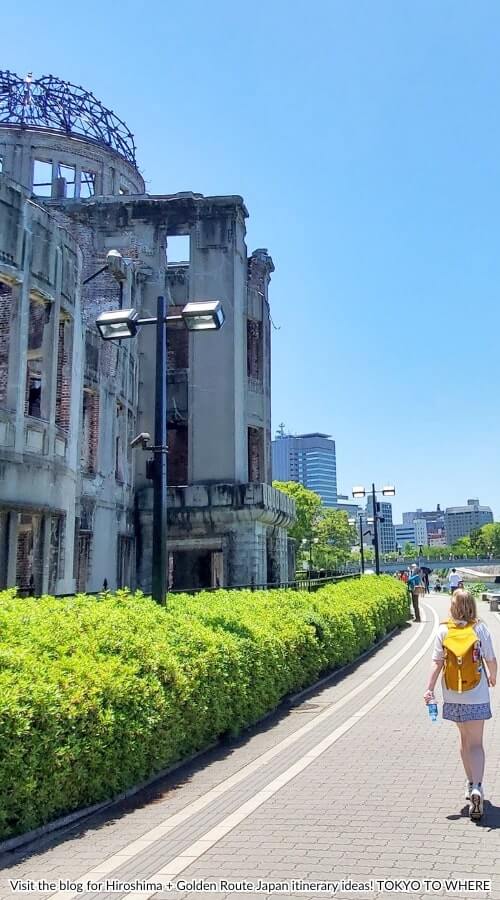
Hiroshima is best-known for the Hiroshima Peace Memorial Park, and you can have a dedicated Hiroshima peace day. Consider doing the Hiroshima peace park walking tour for greater context and appreciation of the local impact of the tragedy that changed the course of global history.
If you want to fully explore everything, it’s possible to spend all day doing Hiroshima peace things on your own. But you will generally want to allow for 2-3 hours at the minimum.
You’ll want to take a walk through the park to see the different monuments which each tell a story of the local impact the global tragedy had on real people. There’s a small free museum type thing at the peace park, and then at the one end there’s the actual peace museum. The displays are emotionally powerful. Check the hours before you go.
Day 16: Hiroshima day trip to Miyajima floating shrine
Hiroshima Station to Miyajima time: 30 minute train + 10 minute ferry
Overnight in Hiroshima (3 nights)

The other major reason people go to Hiroshima is for Miyajima island. This is a classic day trip from Hiroshima. You’ll take a ferry to Miyajima!
Miyajima is best known for the “floating shrine” (big red torii shrine gate) that may or may not be floating when you go. If it’s high tide, it will be floating. If it’s low tide, it won’t be, and instead, you can walk out to it!
You can check the tide times before you go, but if you are on Miyajima for a few hours, you’ll likely have a chance to see the shrine at both high tide and low tide.
Miyajima is also known for its deer, and you won’t need to try hard to see them. You will come across them naturally.
You can also hike up or take the ropeway up to the summit of the island for what’s considered to be one of the most beautiful views in Japan.
Day trip to Miyajima itinerary
- Hiroshima Station to Miyajimaguchi Station
- Ferry to Miyajima
- Spend time on Miyajima island
- Ferry from Miyajima
- Miyajimaguchi Station to Hiroshima Station
Cost of JR tickets:
- Hiroshima to Miyajimaguchi train ticket one way: 420 yen
- JR Miyajima ferry tickets round trip: 400 yen
Day trip from Kyoto
If you’d rather not pick up and move around as much, it is possible to go from Kyoto to Hiroshima and back in one day. It’s even possible to go to both Hiroshima and Miyajima in one day as a day trip from Kyoto, although it will be a long day. Staying in Hiroshima will allow for a more restful experience.
Day 17: Hiroshima to Tokyo
DAY 14 of JR PASS
Hiroshima Station to Shinagawa Station or Tokyo Station shinkansen train time: 4 hours
Overnight in Tokyo near airport or in Shinjuku (1 night)
Get back to Tokyo the night before your flight out!
Cost of JR tickets:
- Hiroshima Station to Tokyo shinkansen train ticket: 19,900 yen (US$130)
Where to stay in Tokyo
If you think you’ll be in “ready-to-go-home” mode after 3 weeks of travel, then it will be convenient to stay near the airport. These hotels have a free airport shuttle and an option to add-on breakfast.
Haneda Airport: Hotel JAL city Haneda – read the reviews on booking.com or expedia
Narita Airport: Hotel Nikko Narita – read the reviews on booking.com or expedia
If you want to take in Tokyo’s vibrant evening streets one last time, stay in Shinjuku at a place like Hotel Gracery Shinjuku so you can have a walk over to Godzilla Road, Omoide Yokocho, and/or Golden Gai! (Hotel Gracery is right at the godzilla head.)
Read the reviews at booking.com or expedia.
If you are continuing your travels in Asia, instead of flying out of Tokyo, you can go from Hiroshima to Osaka by train (2 hours), spend the night in Osaka, and then fly of Osaka’s Kansai international airport (KIX) the next day. This is a major regional hub with direct flights to destinations in Asia such as Taipei (Taiwan), Seoul (South Korea), Bangkok (Thailand), Singapore, Hong Kong, and more! I like to use kayak.com for initial flight research and then book direct with the airline.
And even if you’re heading straight home, you may want to check flights out of KIX to see if there are ideal flights. KIX does have direct flights to Hawaii if you want to stop by there on your way back! 😁
Day 18: Fly out of Japan!
Sayonara Japan!
Or… if you want to extend your trip and make it a 21-day JR pass, then instead of flying out, continue on by train for a Northern Japan itinerary!
JAPAN TRAVEL > NEW GOLDEN ROUTE MAP | TOKYO MAP | KYOTO MAP