
Kon’nichiwa!
I would like to give you suggestions in Yokohama for if you’d like to see things that are more traditional classic Japanese, as opposed to focusing on big-city things.
Like if you are choosing to stay in Yokohama instead of Tokyo for your first trip to Japan because you’re here for a cruise from Yokohama!
I’ve been to Yokohama 3 times, and it was when I was in Yokohama to start a cruise that I did most of the things I’ve done. So I’ve had more than a day in Yokohama, but I’ve taken what I’ve done across all the days and put it into this one day Yokohama itinerary!
This will include going to see Japanese gardens (and having traditional matcha green tea and specialty noodles), a shrine, and ending your day at a baseball game to cheer on the local Yokohama team!
And okay, I’m also stretching it a bit to give you a very East Asian thing to do that you might not necessarily see as Japanese!
This Yokohama itinerary is perfect if you want a mix of traditional sights and a taste of Japanese baseball culture.

There are partner websites included on this blog. I may earn a commission.
JAPAN TRAVEL > TOKYO MAP | YOKOHAMA MAP >
> YOKOHAMA > RAMEN | GARDENS | MATCHA | BASEBALL
>> COMBINE WITH YOKOHAMA > KAMAKURA | ENOSHIMA
Day trip to Yokohama from Tokyo
It’s reasonable to do a day trip to Yokohama if you’re staying in Tokyo.
For example, from the centrally located neighborhood of Shinjuku in Tokyo to Sakuragicho Station (Minato Mirai) in Yokohama will take just about an hour by train.
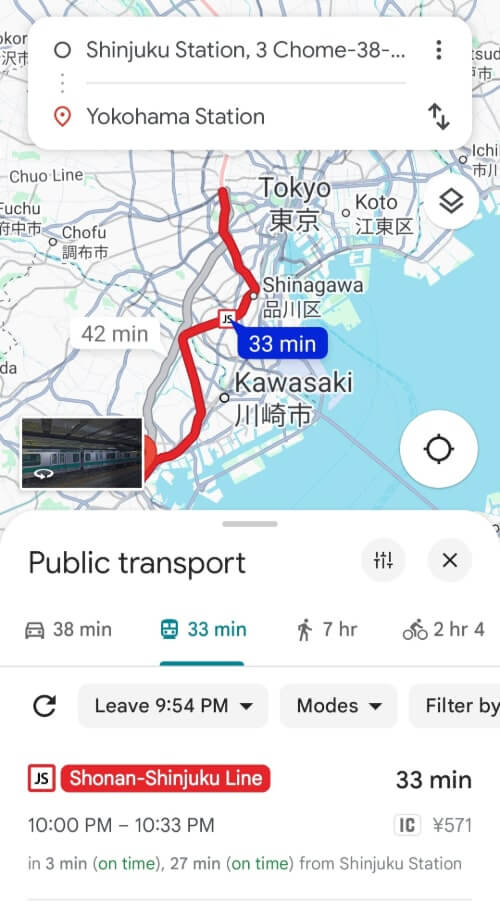
👆 Tokyo to Yokohama map: You can get from Tokyo to Yokohama by train directly in just about 30 minutes. It may be a little longer depending on where exactly in Tokyo you’re coming from and where exactly in Yokohama you’re going to! Google maps makes it easy to navigate Tokyo and Yokohama by train! See map + directions. (Adjust departure time to give you a better idea.) It will also tell you the train fare. The cost to go to Yokohama by train from Tokyo is around 600 yen (US$4).
Yokohama tours you must consider!
- Hands-on ramen-making experience at a historic family-run noodle company
- Local foodie tour: Izakaya bar hopping in Noge district
- Home-style Japanese cooking class at a local’s home
Now let’s look at things to do on your own with one day in Yokohama!
Start: Sakuragicho Station
Your starting point for Yokohama can be Sakuragicho Station!
Sakuragicho Station is a gateway for the Minato Mirai waterfront area of Yokohama, although this itinerary does not cover that. It’s another area you could consider spending time at for an easy-going couple of hours.
Before you leave the station, there’s a tourist information center that you can stop by for a Yokohama tourist map.
There are also coin lockers at Sakuragicho Station for luggage storage.
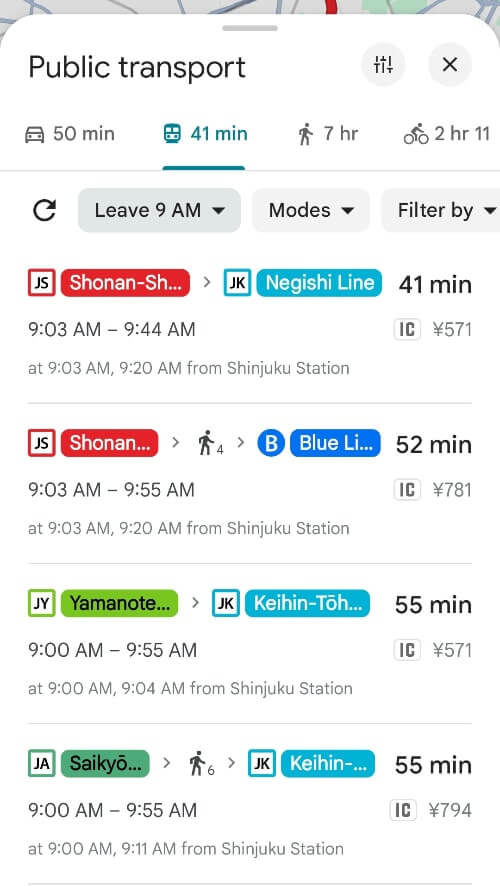
👆 Tokyo to Yokohama train route directions: You can use google maps to figure out directions and train routes from Tokyo to Yokohama. You can look more into each route to further explore the helpful details! See map + directions. (Adjust departure time to give you a better idea.)
If you’re getting your day started later, then a 5 minute walk from the station is Ramen Kaibutsu (reviews + map). This is a super small ramen shop with just a few seats that opens at 11am. The normal hours are 11am to 3pm and 6pm to 10pm, closed Wednesdays. I found it looking around for food spots with good reviews on google maps.
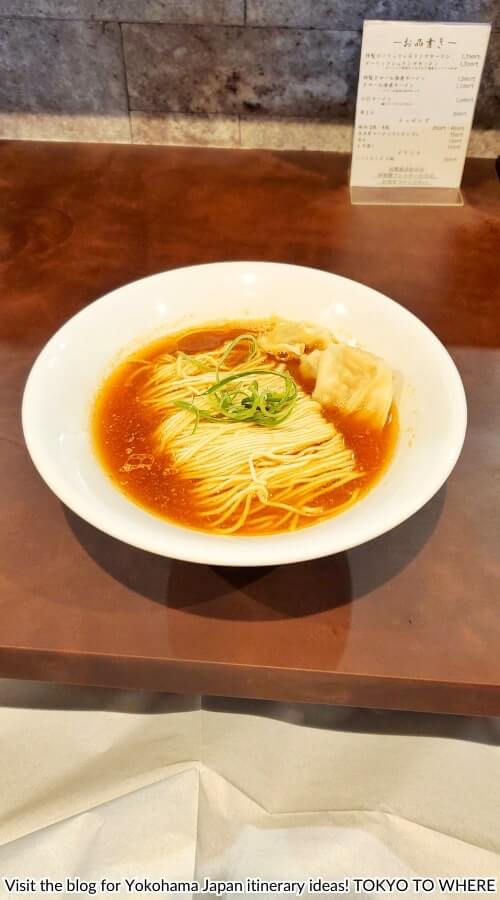
👆 I went to a ramen shop that was a 5 minute walk from Sakuragicho Station. I got the standard kake ramen (1000 yen / US$7), and I also got the 3 piece Nagoya cochin wonton (350 yen / $3) since it seemed like it was a specialty of the shop. For a complete Japanese ramen experience, they even offered a paper bib so your ramen wouldn’t splash over your clothes! 😆 The menu was in Japanese only, but use the google translate app’s camera option to read the menu in English! The main specialty ramen of the Ramen Kaibutsu restaurant seems to be special garlic shrimp ramen (1700 yen / $12) and special lobster ramen (1500 yen / $10). Cash only.
And I haven’t included it as part of this one day Yokohama itinerary, so I’ll tell you about it now while we’re talking about food. You may also want to consider going to the Cup Noodles Museum and/or the Ramen Museum. These are some of the most popular museums in Yokohama.
The Cup Noodles Museum is a 15 minute walk from Sakuragicho Station. You can enter between 10am and 5pm (closes at 6pm), and it costs 500 yen (US$4).
You can also do a fun cup noodle making experience while you are here.
The Ramen Museum is between Tokyo and Sakuragicho Station, near Shin-Yokohama Station. It’s open from 11am to 9pm, and it costs 450 yen.
See more about ramen-themed things to do in Yokohama.
The Hotel Resol Yokohama Sakuragicho is a 6 minute walk from the train station and a few minutes walk from the waterfront.
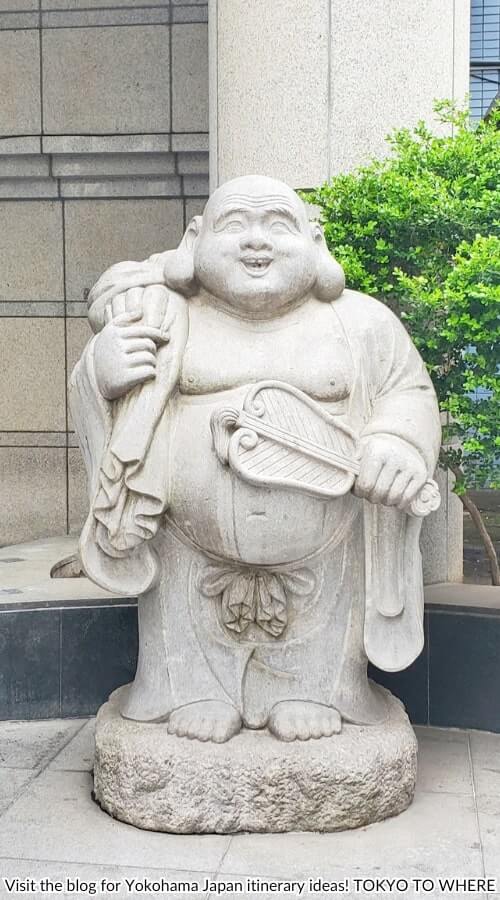
👆 I came across a laughing Buddha statue while walking the streets of Yokohama! 😁 This was walking from the ramen shop to the Iseyama Kotai Jingu Shrine.
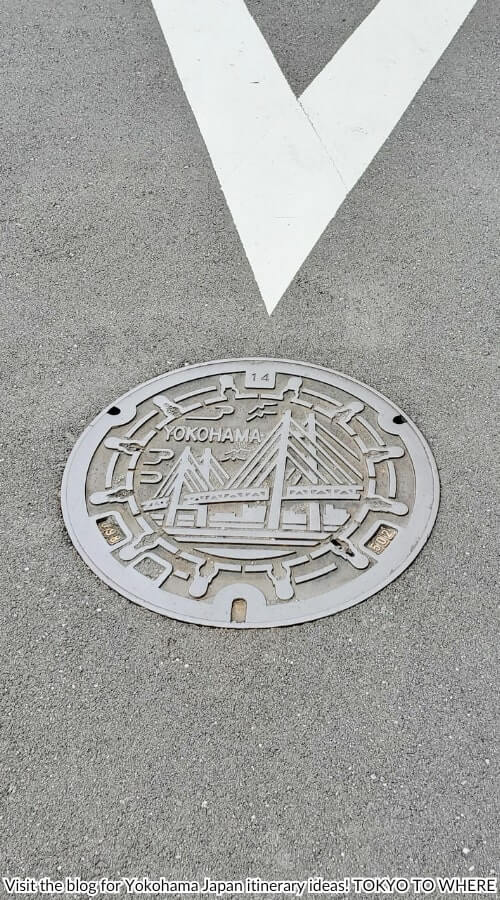
👆 More things to see walking the streets! It’s a manhole cover in Yokohama! A lot of cities in Japan design fun manhole covers!
Iseyama Kotai Jingu Shrine
The reason we are starting at Sakuragicho Station is because it’s a 10 minute walk to get to Iseyama Kotai Jingu Shrine (map). This is the most notable shrine in Yokohama, so if you haven’t seen enough shrines in Japan yet, this is the one to go to in Yokohama!
Iseyama Kotai Jingu Shrine can be a quick visit. It’s free. There are a lot of stairs. Go down different stairs than you went up so you’ll see something different.
The shrine opens at 9am.

👆 Stairs up to the shrine in Yokohama.
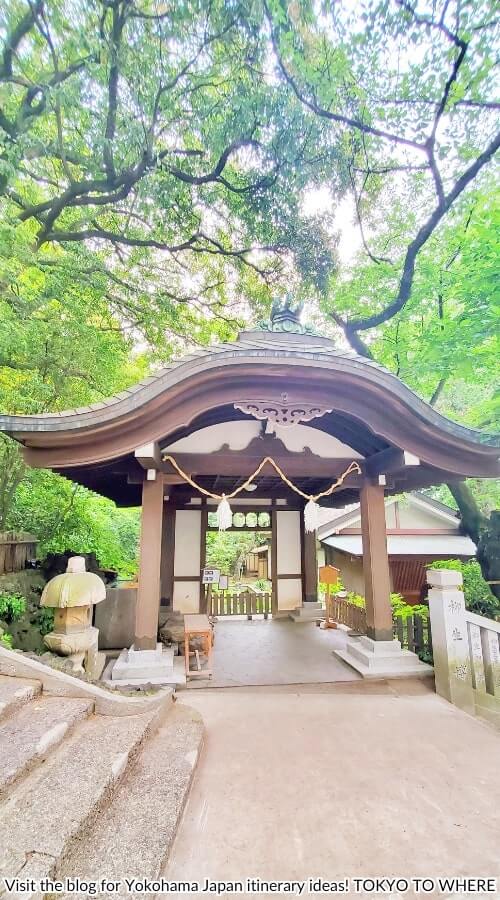
👆 Go down different stairs to see more of the shrine area. There’s a hand washing station here.
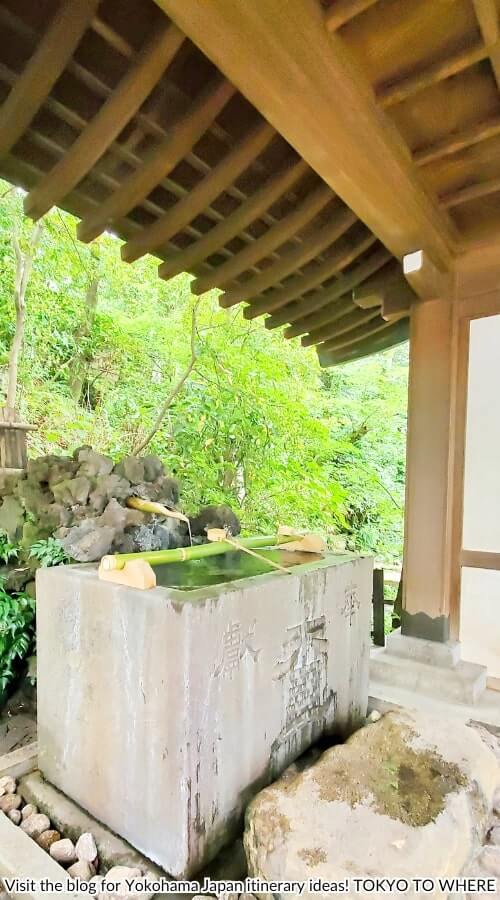
👆 This is the hand washing station. You can take part in the ritual of washing your hands when you visit a shrine.
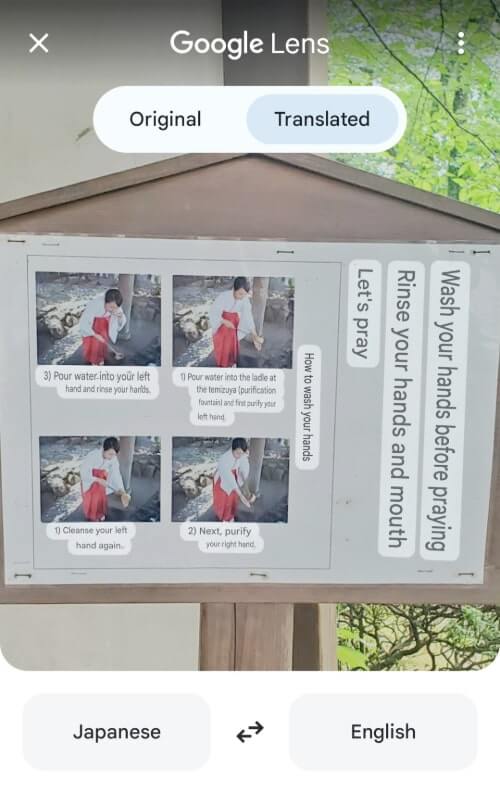
👆 The instructions were in Japanese, but once again, you can use the google translate camera option to be able to know that you are doing it properly!
Sankeien Garden
Sankeien Garden is a little bit of a ways from the Minato Mirai area, and bus will be the way to get there. It will be around a 30 minute bus ride to get to the garden from the shrine (map).
This is the best Japanese garden in Yokohama, and you’ll see classic Japanese landscape with a nice stroll through the area.
It’s been said that if you’ll be staying in the Tokyo area and won’t be making it to Kyoto, then Sankeien Garden is the next best thing to visit… or at the very least it offers a compelling alternative! (Kamakura does too, another day trip from Tokyo.)
Sankeien Garden has a collection of historic buildings relocated from various parts of Japan, including a pagoda and a temple hall from Kyoto, a traditional thatched-roof house (gassho-style) from the UNESCO world heritage town of Shirakawago, a former residence of a feudal lord from Kyoto, and several old-style tea houses.
So it makes for a very good way to see different types of traditional Japanese buildings in one spot.
There’s also a restaurant at Sankeien Garden that serves specialty “Sankei soba” noodles that is only available there. You can also drink traditional matcha green tea with garden views!
You can often find a spot to order traditional Japanese matcha at gardens and temples across Japan. This is one of them!
At the minimum, you’ll want to give yourself 1-2 hours for Sankeien Garden. I spent 3 hours there.
The entry fee at Sankeien costs 900 yen (US$6). The specialty soba was 950 yen (US$7), and the traditional matcha was 700 yen ($5).
Note the gassho-style house is closed through January 2026 due to renovation.

👆 Walking in Yokohama to see traditional Japanese landscape.
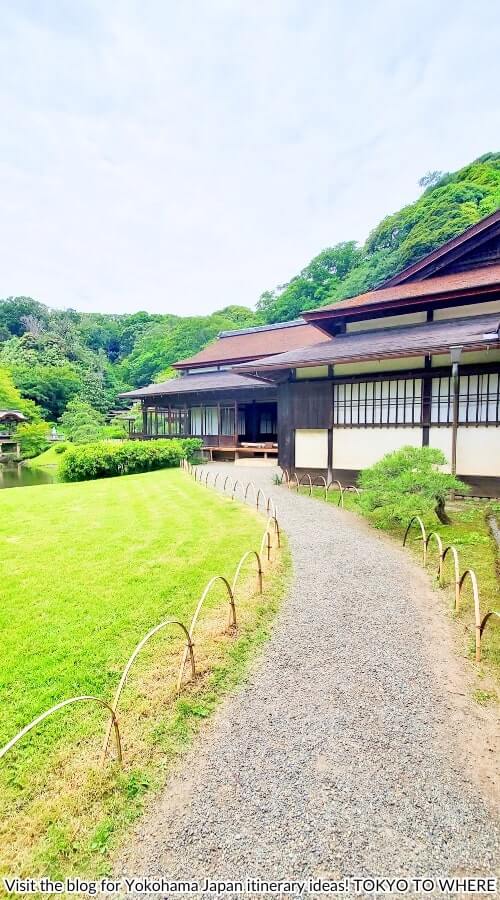
👆 You’ll see many traditional Japanese-style buildings on a walk through Sankeien Garden.

👆 Time your visit to Sankeien so you’ll have room for food!

👆 Sankei soba noodles can only be had at the Taishunken restaurant at Sankeien Garden, which makes it a true Yokohama specialty! It’s a 100-year-old recipe created by the founder of Sankeien Garden.

👆 You can also drink some traditional matcha tea in Yokohama at the garden, which comes with a Japanese sweet.
Matcha tea experience in Yokohama
It’s possible to have a special matcha experience elsewhere in Yokohama too, by doing the Japanese sweets-making and matcha tea ceremony or the Japanese sushi and matcha experience in a local home.
See more about matcha experiences in Yokohama.

👆 You can even see some bamboo trees too.
Yokohama Chinatown
It’s a 20 minute bus ride from Sankeien Garden to Yokohama Chinatown (map).
The train station near Yokohama Chinatown is Motomachi-Chukagai Station if you want to start or end your day here (map).
If it’s your first time in Asia, and/or you’ve never been to a Chinatown anywhere in the world, then I think you’ll find the Yokohama Chinatown interesting. You’ll get very East Asia vibes.
For a better Chinatown experience, you want to do the guided walking tour that comes with food tasting.
If you want to be on a mission in Chinatown, you can go and search for the 10 gates of Yokohama Chinatown!
You can also see iconic Chinese temples in Chinatown.

👆 You can see fun Chinese-style designs. See more about walking in Yokohama Chinatown on your own.
Also while we are talking about international influences, Yokohama was one of the first Japanese ports opened to foreign trade in the mid-19th century, which brought Western architecture, cuisine, and culture that still shapes the city today.
The Red Brick Warehouse is one of Yokohama’s notable historical buildings reflecting its past as an international port when Japan opened up to the world. There is also the British House that offers another glimpse into the city’s foreign influences. (Hakodate is another port town that is quite similar to this, with its own red brick warehouse in a western-influenced neighborhood!)
Yamashita Park
Walking from Chinatown to Yamashita Park is about a 10 minute walk (map). There isn’t anything particularly “traditional Japanese” about Yamashita Park, but it’s convenient to go after Chinatown if you want to go for a nice waterfront walk.
End your day at Yamashita Park if you won’t be going to a baseball game!
Yamashita Park is one of the main waterfront parks of Yokohama.
If it’s the season, then there’s a nice rose garden, called the Future Rose Garden. This is free.
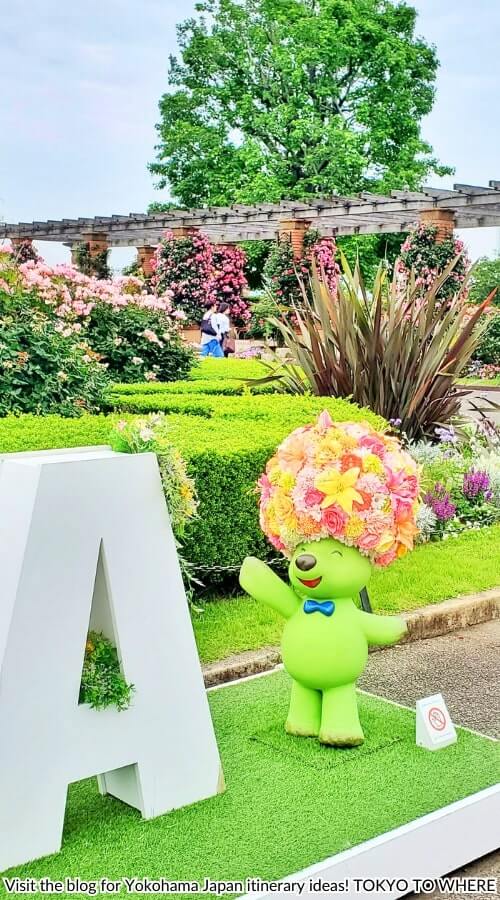
👆 The Rose Garden at Yamashita Park was in bloom when I was in Yokohama in March. Even if it’s not the season, Yamashita Park makes for a nice waterfront walk.

👆 The garden at the Yokohama sign.
If you’re a cruise ship enthusiast or a maritime history enthusiast, then the Hikawa Maru will be interesting to see. As a retired historic ocean liner, it’s now a museum, but it used to be a cruise ship that sailed from Japan to Seattle. The admission is 300 yen (US$2), and make sure it’s open before you go. It’s usually closed on Mondays.
The Hotel New Grand and Hyatt Regency Yokohama are a few minutes walk from Yamashita Park.
I was on a cruise that offered a free cruise shuttle from Yamashita Park to the Daikoku Pier before a cruise (Cunard). The blue spiral staircase (map) and this spot are reference points for where to go. This was the same area that I got a free cruise shuttle from Daikoku Pier to Yamashita Park after a cruise (Princess). The closest train station is Motomachi-Chukagai Station (map).
Itsukushima Jinja Shrine
If you find yourself with extra time, you can also walk to the Itsukushima Jinja shrine (map), which is a 10 minute walk from Yokohama Stadium.
If you haven’t yet seen a traditional red torii shrine gate, here is a chance to see one!
This is a small shrine with a red torii gate along the side of the street. You can also see a traditional inari fox statue here too.
This is a quick visit, and it’s free.
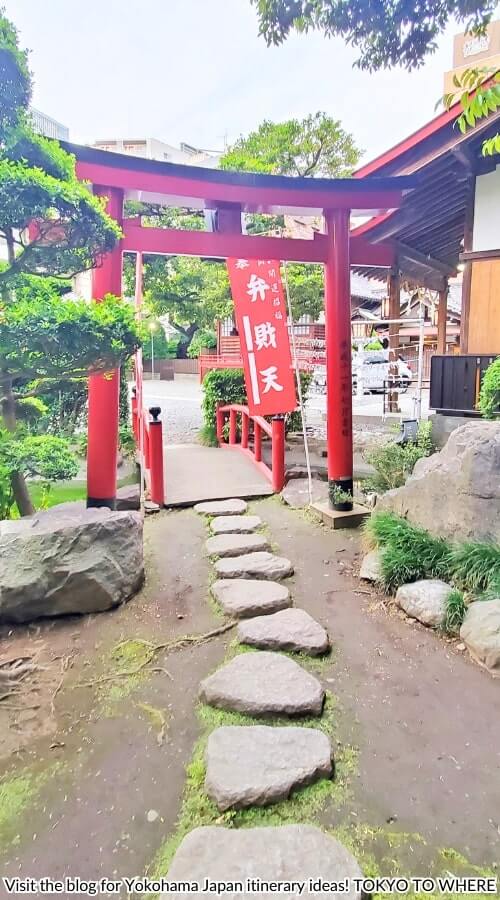
👆 Red torii gate in Yokohama at a small shrine near Kannai Station.

👆 Inari fox statue in Yokohama.
Just a few minutes from Itsukushima Shrine, there is Japanese-style Italian food at a restaurant called Saizeriya (map). I went here to eat before a baseball game!
Higa Garden
Higa Garden is a tiny garden that you won’t necessarily want to go out of your way to see, but it’s right next to Yokohama Stadium, so if you’re at the stadium, you can walk through it!
When I went, there were a bunch of turtles in the pond. It was so cute! Some were swimming, and some were on a rock or land.
There is also a stone peace lantern, and it’s said that it’s a replica of one that can be found in the Portland Japanese Garden in Oregon.
This can be a quick visit, unless you want to sit and rest! It’s free.
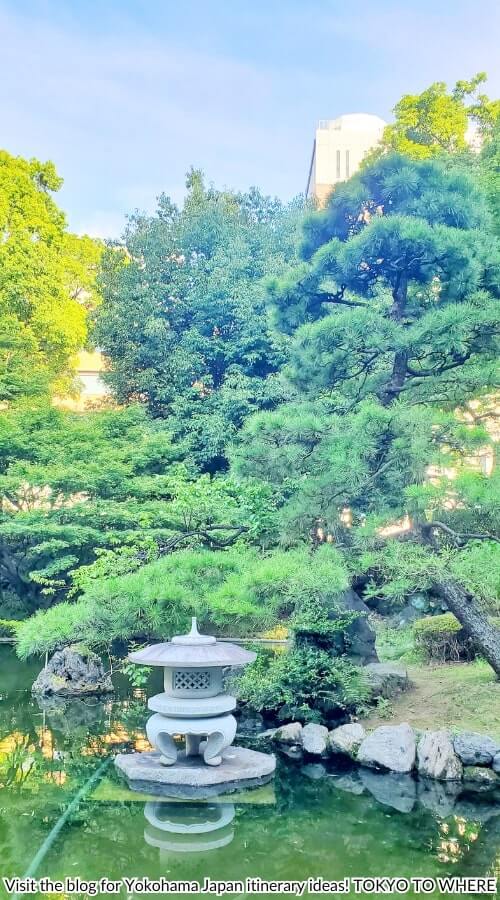
👆 The stone lantern that’s a replica of one at the Japanese garden in Portland.
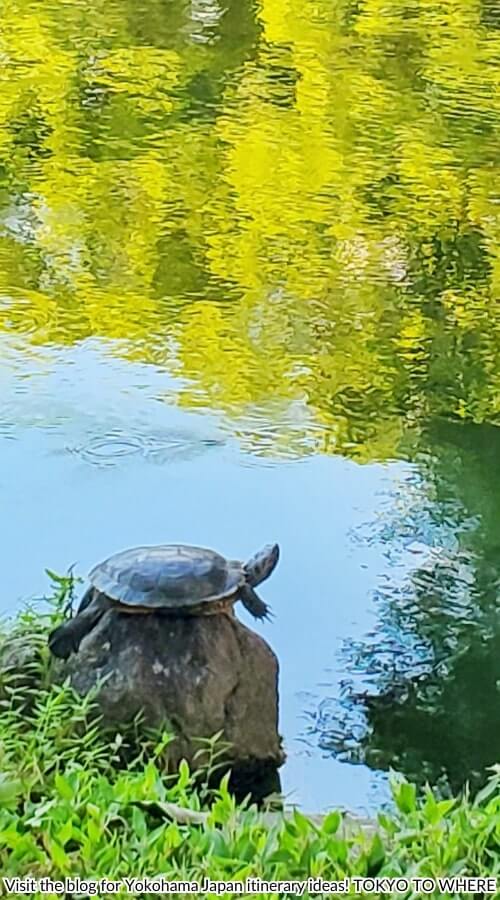
👆 A turtle in Yokohama at Higa garden! So cute!
Yokohama Stadium for Yokohama DeNA Baystars baseball game!
It’s about a 15 minute walk from Yamashita Park to Yokohama Stadium where the Yokohama DeNA Baystars play baseball (map). It about a 10 minute walk from Chinatown to Yokohama Stadium (map).
The most logical route is actually Yamashita Park to Chinatown to Yokohama Stadium if you want the shortest walking route. I think Yamashita Park can be a good place to end the day and take it easy walking along the waterfront if you won’t be going to a baseball game.
You can also walk around the outside of the baseball stadium even without tickets if you want to take in the pre-game atmosphere.
The biggest excitement of your day in Yokohama can be going to a Japanese baseball game to cheer on the Yokohama DeNA Baystars!
Even if you’re not really a baseball fan, it’s something you can have fun with as a Japanese cultural experience.
You’ll want to sit in the cheering section of the Baystars so you can join in for some of the cheering!
They do have dedicated cheers/chants for each player, but you don’t need to know the whole chant in order to get involved. Once I figured out the player’s name, I just joined in the chanting for that part! Being a participant in the chanting made it more fun!
There are plenty of food options inside and outside the stadium.
It won’t be any problem to catch a train back to Tokyo after the game. I went to a Yokohama baseball game when I was staying in Shinjuku at Nishitetsu Inn Shinjuku.
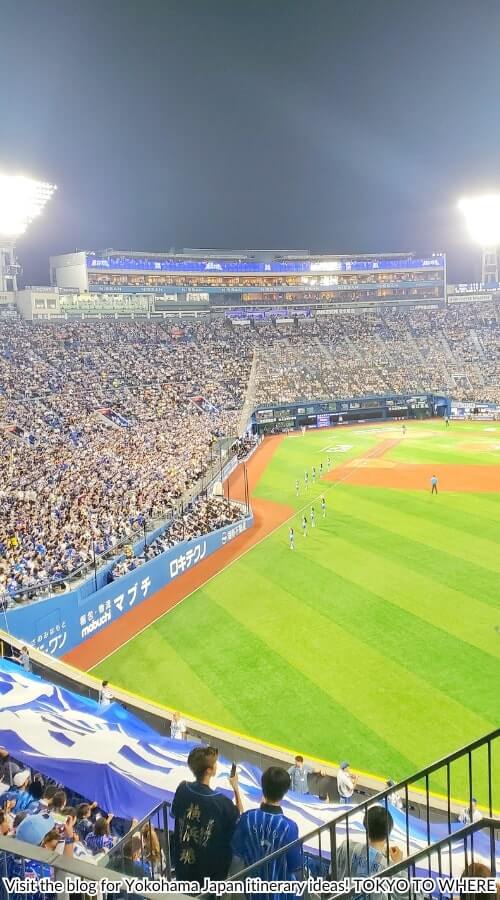
👆 I went to a baseball game in Yokohama as a trip from Tokyo.
Is going to a Japanese baseball game worth it?
Read the REVIEWS and read MORE REVIEWS of what a Japanese baseball game is like!
It’s a cultural experience!
If you are an MLB fan, then you might appreciate going to this game even more, because Shota Imanaga was with the Yokohama Baystars for 8 seasons!
Going to a game at Yokohama Stadium is just one of the ways that you can see baseball in Japan! There are 5 baseball teams in the Tokyo area… and more across the country! See about how to buy Japanese baseball tickets.
The Daiwa Roynet Hotel Yokohama-Koen and Super Hotel Yokohama Kannai are a few minutes walk from Yokohama Stadium.
JAPAN TRAVEL > TOKYO MAP | YOKOHAMA MAP >
> YOKOHAMA > RAMEN | GARDENS | MATCHA | BASEBALL
>> COMBINE WITH YOKOHAMA > KAMAKURA | ENOSHIMA